GY4027
Topic 4: Upland Landscapes
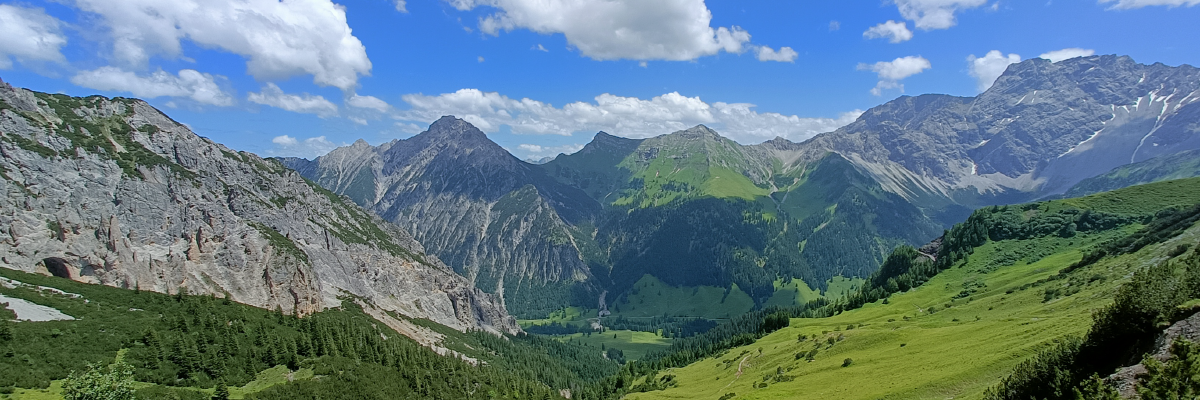
For the rest of the module, we are now shifting from considering the broad processes like weathering, erosion, transport, and deposition in general, to looking at how they combine to shape landscapes in particular settings. This topic, we will consider the processes operating in upland landscapes, and how such landscapes evolve through time.
By the end of this topic you should be able to:
- Explain the main processes operating in upland landscapes
- Describe the general properties of upland sediments
- Explain the concept of landscape maturity
Lecture
Lecture slides: L4 Upland Landscapes
Reading
Suggested Textbook
I suggest reading Chapter Eight of Huggett, R. (2017) Fundamentals of Geomorphology, 4th Edition. Routledge, London.
Chapter Eight is the chapter on hillslopes - don’t worry about the mathsy bits, it’s the general concepts that are important.
Available online.
Academic papers
- Amine, A., El Ouardi, H., Zebari, M., El Makrini, H., and Habibi, M. 2020. Relative landscape maturity in the South Rifian Ridges (NW Morocco): Inferences from DEM-based surface indices analysis. Applied Computing and Geosciences 100027. doi: 10.1016/j.acags.2020.100027
This paper is an example of using geospatial techniques to look at upland landscapes.
- Bishop, P. 2007. Long-term landscape evolution: linking tectonics and surface processes. Earth Surface Processes and Landforms, 32, 329-365. doi: 10.1002/esp.1493
This review paper covers some of the key techniques in landscape evolution, and the interplay between the tectonic processes (driving uplift) and surface processes (which we covered in the first 3 lectures).
Optional additional reading
One of the formative papers in this topic is
- Hack, J.T. (1960). Interpretation of erosional topography in humid temperate regions. American Journal of Science 258, 80–97 download pdf.
John Hack challenged the prevailing Davisian “Cycle of Erosion” proposed by W.M. Davis (1899). While Davis envisioned landscapes aging from “Youth” to “Old Age” (peneplain) following uplift, Hack argued that landscapes rapidly adjust so that erosion balances uplift: dynamic equilibrium. It’s an older paper of course, but bearing in mind that there’s been 60 years of research since this was pubished, it can give you an idea of the core concepts and where the field developed from.
On a different note, while the Bishop (2007) paper gives a good review of the interplay of tectonics and surface processes, there’s also some interesting work such as
- Zeitler, P.K., Meltzer, A.S., Koons, P.O., Craw, D., Hallet, B., Chamberlain, C.P., Kidd, W.S.F., Park, S.K., Seeber, L., Bishop, M., and Shroder, J. 2001 Erosion, Himalayan geodynamics, and the geomorphology of metamorphism. GSA Today 11, 4–9 download pdf
which shows that, rather than the obvious “tectonics pushes the land up, rivers erode it down”, erosion by rivers can actually help drive deep tectonic processes.